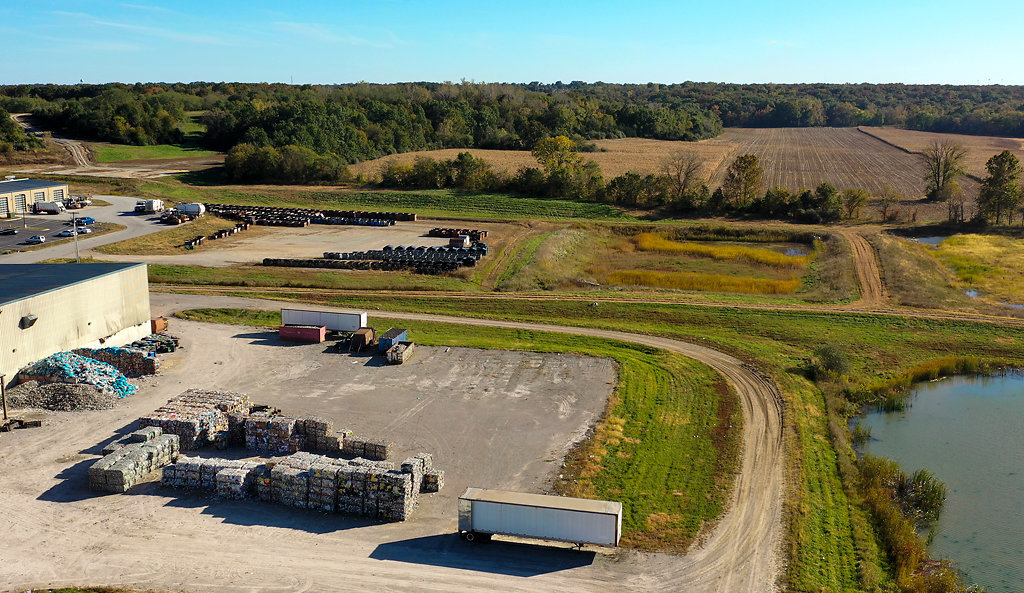
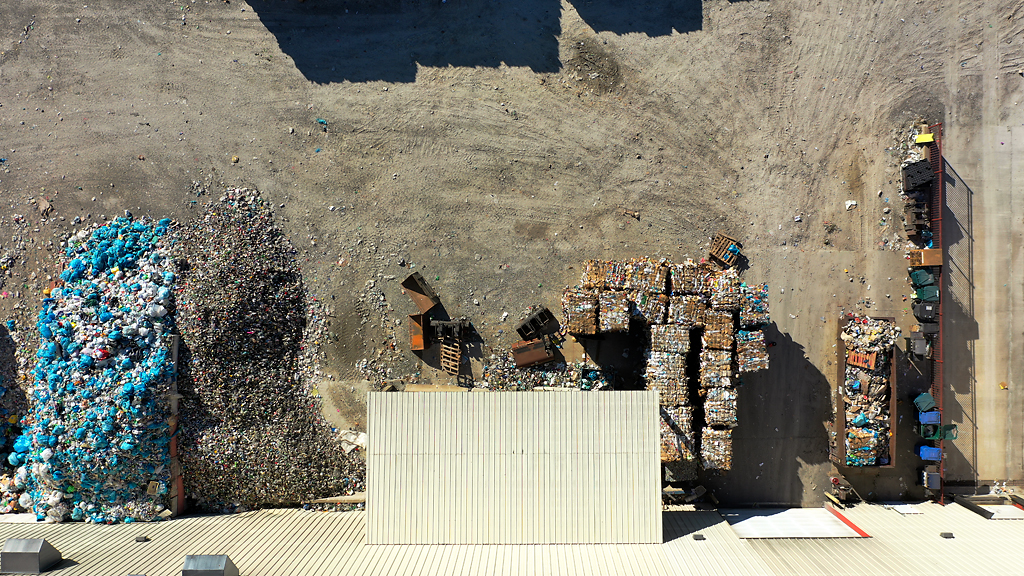
Bales of recyclable materials sit outside the Material Recovery Facility on Oct. 18 in Columbia. More resilient materials — such as tin and some plastics — are stored outside, while materials like mixed paper are kept indoors.
Ethan Weston/Missourian
Sorted recyclable materials sit outside the Material Recovery Facility on Oct. 18 in Columbia. The facility wants to increase intake of materials but does not have the capacity due to the population growth in Columbia.
Ethan Weston/Missourian
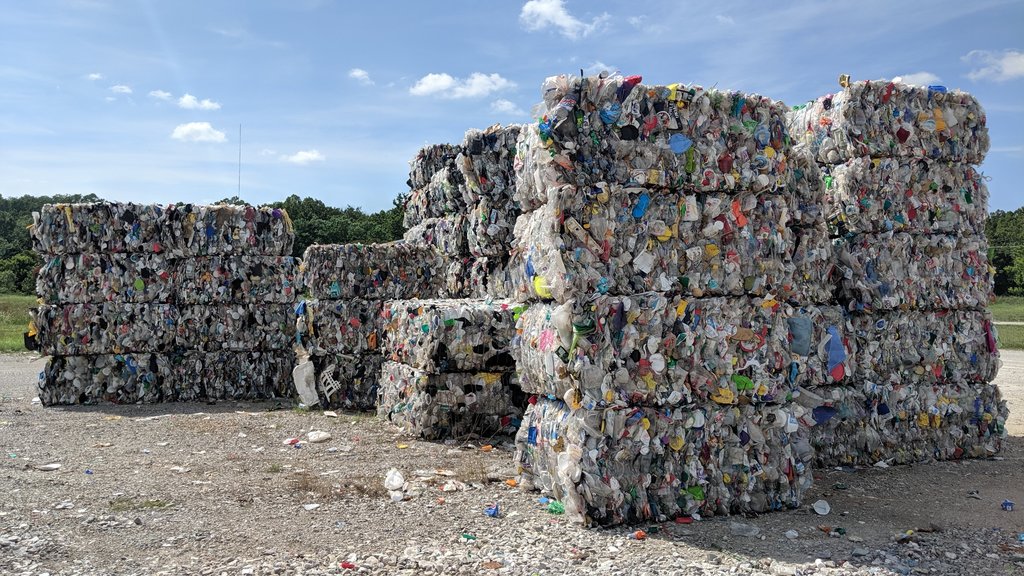
Plastics with numbers three to seven can stand outside the facility for as long as half a year without a buyer. Karina Zaiets/Missourian
Bales of recyclable materials sit outside the Material Recovery Facility on Oct. 18 in Columbia. More resilient materials — such as tin and some plastics — are stored outside, while materials like mixed paper is kept indoors.
Ethan Weston/Missourian
Outside Columbia’s materials recovery facility, around 40 tons of bales of plastics are stacked upon each other to protect as much material as possible from the destructive power of rain and the sun. The facility, built to serve a little more than 86,000 around 18 years ago, is struggling to meet the needs of nearly 122,000 people.
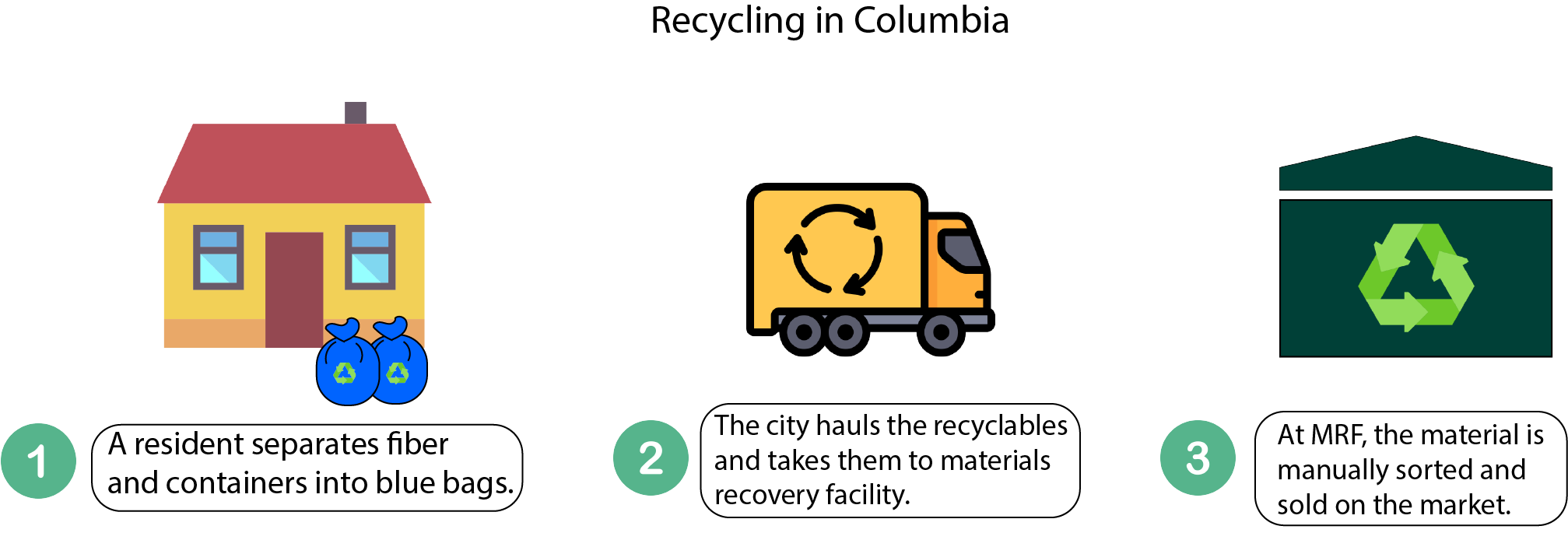
Columbia is one of the few Missouri cities that handles its recycling from the beginning till the end. City workers haul the material, sort it and sell it; in other cities, recyclables can go through as many as three companies before being sold.
“Whenever they see that they are not making enough money off of recyclables, they go to that city and renegotiate that contract to cover it,” said Leland Rehard, District Manager for the Mid-Missouri Solid Waste Management District. “And that's where you get into the issue of services getting dropped or changed or prices going up for that city. But that hasn't happened here probably because we own it.”
The city’s recycling program came close to making a profit a couple of times but was never able to break even, in part because it accepts glass and plastics with grades 3 to 7 — some of the most difficult materials to sell.
“So it's always balancing around that line between getting paid very little, not getting paid at all, but they recycle the material, or we pay them to make sure it gets recycled,” said Ben Kreitner, waste minimization coordinator for the city of Columbia.
One of the worst cases happened between May 2018 and February this year. During that time, all 3-to-7 plastics that residents separated for recycling were stored outside the recycling facility. By the end, there were 200 tons of the material.Kreitner was calling companies along the East Coast from the South all the way up to Canada. Eventually, he found an article about a Canadian company interested in that kind of material. EFS-plastics, a producer of postconsumer recycled resin pellets north of Detroit, paid 2 cents per pound, the highest price Columbia received for 3-to-7 plastics during the last couple of years.
“I was getting excited,” said Nick Paul, recovery superintendent for the city of Columbia.
That is the second time a Canadian company “rescued” the city. Between November 2017 and February 2018, the city had been caching 3 to 7s until ReVital Polymers, a plastic processor in Sarnia, Ontario, reached out and bought all of it.
“Sometimes we go to conferences, and we would meet new processors or factories that way,” Kreitner said. “And we could reach out to them and say, ‘Do you want this material; we have this many truckloads?’ Oftentimes they want pictures. Some bidders, like the one in Quincy, Illinois, they did not want any plastics that were colored black. So they would look at our pictures and see, ‘Well, here's a black flowerpot. Here's a black tray.’ And they would just kind of evaluate our material that way.”
Nos. 1 and 2 plastics, on the contrary, don’t usually stay long at the facility. No. 1 plastics go to companies in New Jersey or Georgia for 15 cents per pound; No. 2 plastics are bought by a company in Ohio for 21 cents per pound. Overall, during the last year, Columbia’s recycling facility was able to bring more than $1.86 million in revenue while the cost of operating the facility was around $623,000. However, that number doesn’t include another important expense: hauling, which differs around the city.
“In our case, we're located in a good area because we could sell it to factories on the East Coast and down in Texas or up towards the Great Lakes region,” Kreitner said. “So we actually have a lot more options.”